
Material Hardness Classification and Corresponding Drill Bit Selection
Soft Materials (low hardness, such as wood, plastic, rubber, etc.)
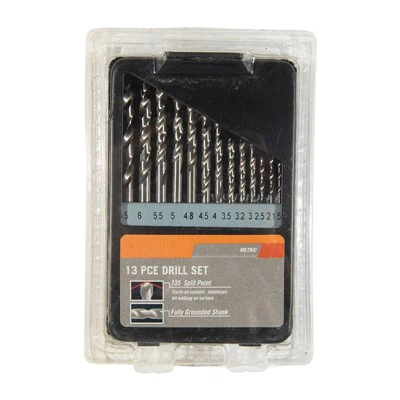
These materials are soft and have low cutting resistance, but are prone to chip adhesion. Woodworking drill bits or standard high-speed steel (HSS) twist drills are recommended. In plastic processing, using a standard high-speed steel twist drill can easily drill the required hole diameter without damaging the material.
Medium Hardness Materials (such as low-carbon steel, aluminum alloys, copper alloys, etc.)
These materials have a certain degree of hardness and toughness, and generate heat and chips during cutting. High-speed steel (HSS) twist drills are the most commonly used type of drill bit; their classic spiral groove design effectively removes chips and aids in heat dissipation. Titanium-coated high-speed steel twist drills have improved wear resistance and heat resistance after surface titanium coating, resulting in a longer service life. For mass production or when high drilling quality is required, titanium-coated high-speed steel twist drills are a better choice.
High Hardness Materials (such as high-carbon steel, stainless steel, cast iron, hardened steel, etc.)
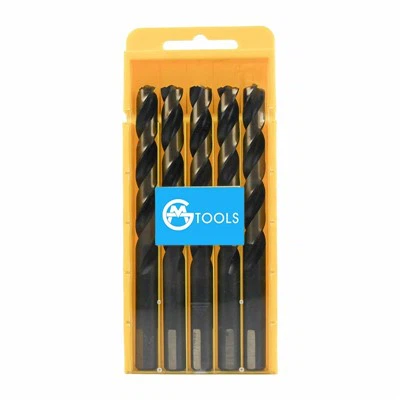
These materials have high hardness, making cutting difficult and easily leading to drill bit wear and overheating. Cobalt high-speed steel (HSS-Co) drill bits, with added cobalt, significantly improve high-temperature resistance and wear resistance, making them suitable for processing high-hardness steel, stainless steel, and cast iron.
Carbide drill bits have extremely high hardness and are often used in professional fields or for processing particularly hard materials and in mass production. Common coatings for coated carbide drill bits include titanium nitride (TiN), titanium aluminum nitride (TiAlN), and titanium carbonitride (TiCN). These coatings further improve the wear resistance and anti-adhesion properties of the drill bit. Coated carbide drill bits perform excellently in continuous processing of high-hardness materials.
Ultra-Hard Materials (such as glass, ceramics, stone, composite materials, etc.)
These materials have extremely high hardness and are usually brittle, making them prone to cracking and chipping during drilling. Diamond drill bits can be divided into single-crystal and polycrystalline diamond drill bits. They have excellent wear resistance but are fragile and not suitable for general metal materials. For drilling ultra-hard materials such as glass, ceramics, and stone, diamond drill bits are the preferred choice. Polycrystalline diamond compact (PDC) drill bits use polycrystalline diamond compacts as cutting elements, combining the hardness of diamond with the strength of cemented carbide, making them suitable for drilling some ultra-hard materials. In composite material processing, PDC drill bits can effectively prevent material delamination and crack propagation.
Methods for quickly determining the drill bit model:
Hardness testing method
Simple hardness test: Some simple methods can be used to roughly determine the material hardness. For example, scratching the material surface with a key; if a scratch is easily left, the material is relatively soft; if it is difficult to leave a scratch, the material is harder.
Hardness tester test: For professional material hardness testing, a hardness tester (such as a Brinell hardness tester, Rockwell hardness tester, Vickers hardness tester, etc.) can be used to accurately measure the material hardness. Based on the measurement results of the hardness tester, compare them with the material hardness classification and corresponding drill bit selection table above to quickly determine the appropriate drill bit model.
Experience-based judgment method
Judging based on material type: If the type of material is known, a preliminary judgment can be made based on the hardness range of common materials. For example, wood and plastics are usually soft materials; low-carbon steel and aluminum alloys are medium-hardness materials; stainless steel and cast iron are high-hardness materials; glass and ceramics are ultra-hard materials.
Judging based on material source and use: Materials from different sources and uses often have different hardness characteristics. For example, construction steel is generally low-carbon steel with relatively low hardness; industrial mold steel is usually heat-treated and has higher hardness. By understanding the source and use of the material, its hardness can be judged, thus selecting the appropriate drill bit model.
Trial drilling method
Small-scale trial drilling: If the material hardness is uncertain, a common drill bit (such as a high-speed steel twist drill) can be used for small-scale trial drilling. Observe the cutting performance, wear degree, and drilling quality of the drill bit. If the drill bit cuts smoothly, wears little, and the drilling quality is good during the trial drilling process, it means that this drill bit model is suitable for the material; if the drill bit wears quickly, cuts with difficulty, or the drilling quality is poor, a drill bit more suitable for high-hardness materials needs to be used.
Gradual adjustment: Adjust the drill bit model gradually based on the trial drilling results. If test drilling reveals that the material hardness is higher than expected, you can switch to a cobalt high-speed steel drill bit or a carbide drill bit; if the material hardness is lower, you can continue using a regular high-speed steel twist drill or a woodworking drill bit.