
Selection Based on Material to be Processed
Metal Materials
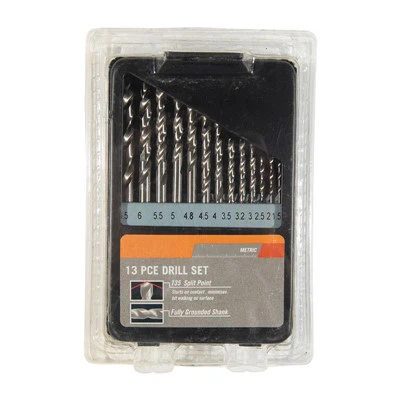
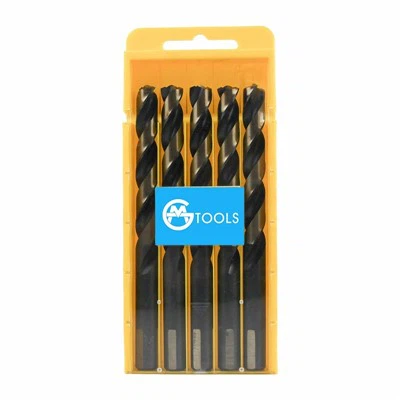
Ordinary metals (such as low-carbon steel, aluminum, copper): High-speed steel (HSS) twist drills offer good value for money and durability, meeting conventional drilling needs.
High-hardness steel, stainless steel, and cast iron: Cobalt high-speed steel (HSS-Co) drill bits, with added cobalt, significantly improve high-temperature resistance and wear resistance; carbide drill bits have extremely high hardness and are often used in professional fields or for processing particularly hard materials and mass production.
Wood
Woodworking twist drills are suitable for drilling general holes; countersink drills can create a conical recess at the hole opening while drilling through holes, making it easy to embed screw heads flush with the wood surface; flat drills can drill blind holes with flat bottoms and smooth, clean edges, making them excellent tools for fine finishing in woodworking and hinge installation.
Brick and Concrete
Specialized drill bits for brick and concrete, with hard tungsten carbide alloy inserts, need to be used with impact drills or rotary hammers, relying on "impact" force to break the material.
Glass and Tiles
Specialized drill bits for glass and tiles have sharp spear-shaped tips or are embedded with diamond/tungsten carbide particles. Drilling should be done steadily and at low speed, and impact mode is strictly prohibited. Water cooling is required throughout the process to prevent material cracking.
Multifunctional Needs
Multifunctional drill bits claim to be suitable for various materials such as wood, metal, and plastic, and are suitable for simple daily repairs at home. However, for tasks requiring high professionalism, their performance and lifespan are far inferior to specialized drill bits.
Consider Drilling Parameters
Diameter
Determines the size of the hole, usually measured in millimeters (mm). Small diameter drill bits (such as for electronic component mounting holes) of 0.5-3mm are commonly used; 3-13mm drill bits are more common in general machining; for larger diameter holes (such as anchor bolt holes in construction projects), large diameter drill bits of 13mm or more can be selected.
Overall Length and Effective Drilling Depth
The effective drilling depth determines how deep a hole can be drilled. When selecting, ensure that it is greater than the workpiece thickness. Extended drill bits are needed for deep hole machining to ensure drilling depth and accuracy.
Shank Type
Must match the chuck of the drill or drill press. Cylindrical shanks are the most common and suitable for standard three-jaw chucks; hexagonal shanks prevent slippage, are easier to clamp, and are less prone to slipping, often used with impact drills or directly connected to electric screwdrivers.
Selection Based on Machining Process
General Drilling
Twist drills are common general-purpose drill bits suitable for general drilling in most materials.
Hole Enlargement
Reamers are used to enlarge existing holes, improving hole accuracy and surface quality.
Countersinking
Countersinking drills can process special shapes such as flat-bottomed holes and tapered holes, often used for chamfering hole edges and countersinking.
Positioning Drilling
Center drills are mostly used for positioning before drilling to prevent drilling deviation.
Focus on Coating and Geometric Parameters
Coating
Some drill bits have special coatings on their surface, such as titanium nitride (TiN) coating, which can improve wear resistance, reduce the friction coefficient, and extend service life. Different coatings are suitable for different processing environments, such as diamond coating for non-ferrous metals and non-metals (such as graphite, plastics, etc.); TiAlN coating is suitable for high-temperature cutting environments and has strong thermal stability.
Geometric Parameters
Geometric parameters such as the point angle and helix angle of the drill bit affect cutting performance. Drill bits with a small point angle have better centering and are suitable for precision drilling; drill bits with a large helix angle have better chip removal performance and are suitable for processing soft materials. Generally, the commonly used drill point angles are 118° and 135°. 118° is suitable for soft metals and wood, with fast drilling speed and high accuracy; 135° is suitable for hard metals, with smaller cutting load and reduced drill bit vibration.